Does Alli Work? An Honest Review of the Orlistat Weight-Loss Pill
Alli is the only weight-loss pill the FDA has approved for over-the-counter use. It does work, with real limits and some famously unglamorous side effects. Here is the honest truth about how it works, who it suits, and how to use it safely.
See the Alli options
The honest short version (read this first)
Yes, Alli works, but modestly, and only as a partner to a reduced-calorie, lower-fat diet, not a replacement for one. Alli is orlistat 60 mg, a fat blocker that stops your body absorbing about a quarter of the fat you eat. In studies, people who took it alongside a sensible diet lost somewhat more than diet alone, think a meaningful boost, not a transformation. The trade-off is real: if you eat fatty meals, the unabsorbed fat causes urgent, oily, unpredictable bowel movements, which is partly the point, it nudges you to eat less fat. It is for overweight adults (18+), needs a daily multivitamin alongside it, and is not for everyone. The options we carry are the Starter Pack (60-count) and the Refill (120-count).
Alli at a glance
| Pack | Best for | Supply | Price |
|---|---|---|---|
| Alli Starter Pack | Trying it / first time | 60 capsules | $44.99 |
| Alli Refill Pack | Best value / continuing | 120 capsules | $67.49 |
The Alli we carry
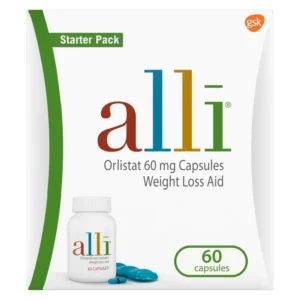
Alli Orlistat 60mg Starter Pack, 60 Count
The sensible first purchase if you want to try Alli: a 60-count that lets you see how you get on with it, and with the side effects, before committing to a larger pack. Taken up to three times a day with fat-containing meals, alongside a reduced-calorie, low-fat diet. Start here, learn how your body responds, then move to the refill if it suits you.
- The standard first-time pack
- 60 capsules of orlistat 60 mg
- A low-commitment way to try it
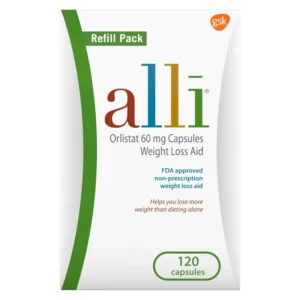
Alli Orlistat 60mg Refill Pack, 120 Count
Once you know Alli works for you and you can manage the side effects, the 120-count refill is the better value per capsule and saves reordering as often. It is the same orlistat 60 mg, just a larger supply for continuing use as part of an ongoing weight-management plan. Choose this only after the starter pack has shown you how you respond.
- Double the supply, better value per capsule
- Same orlistat 60 mg as the starter
- Best once you know it suits you
Does Alli actually work?
Yes, with honest limits. Alli produces modest extra weight loss when, and only when, it is paired with a reduced-calorie, lower-fat diet. It is the only over-the-counter weight-loss aid approved by the FDA, which already sets it apart from the sea of unproven “fat-burner” supplements. In clinical use, people combining orlistat with a sensible diet tend to lose more than diet alone, roughly speaking, for every couple of pounds you would lose by dieting, Alli can help you lose around one more. That adds up over months, but it is a helping hand, not a miracle.
The crucial caveat is that Alli does nothing on its own. It only blocks fat you eat, so if your diet is not already reduced in calories and fat, you will not see much benefit, and you will get the worst of the side effects. The people who succeed with Alli treat it as a tool that reinforces a diet they are already committed to.
How Alli (orlistat) works
Alli contains orlistat, a “lipase inhibitor.” It blocks the enzyme your gut uses to digest fat, so about 25% of the fat in your meal passes straight through you instead of being absorbed. Fewer absorbed calories from fat means a bigger calorie deficit, which is what drives weight loss. The over-the-counter Alli dose is 60 mg, which is half the strength of prescription orlistat (Xenical, 120 mg). Because it works only in your digestive system and is barely absorbed into the body, its effects, good and bad, are all about the fat in your gut.
The side effects, honestly
Alli’s side effects are infamous, and they come straight from how it works: the fat it blocks has to leave your body, so it leaves in your stool. The maker openly calls these “treatment effects.” They can include oily or loose stools, gas with an oily discharge, an urgent need to go, more frequent bowel movements, and difficulty controlling them, especially after a high-fat meal.
Here is the honest reframe: these effects are essentially a feedback system. The more fat you eat, the worse they are, so they train you, quite forcefully, to stick to a low-fat diet. People who eat sensibly (keeping each meal to roughly 15 grams of fat or less) tend to have far milder effects. They are usually worst in the first weeks and ease as your eating adjusts.
Why you need a daily multivitamin with Alli
Because Alli blocks some fat absorption, it also reduces absorption of the fat-soluble vitamins, A, D, E and K, plus beta-carotene. To make up for that, take a daily multivitamin containing these vitamins, at bedtime or at least two hours away from your Alli dose, so the vitamin is absorbed when orlistat is not active. This is not optional fine print, it is a standard part of using Alli properly. A women’s or men’s daily multivitamin covers it.
Who Alli is — and isn’t — for
Alli is for overweight adults aged 18 and over who are committed to a reduced-calorie, lower-fat diet. It is designed for a body weight in the overweight range (generally a BMI of 25 or above); if you are not overweight, it is not for you.
Do not take Alli if you have had an organ transplant or take cyclosporine, if you have problems absorbing food (chronic malabsorption or cholestasis), or if you are pregnant or breastfeeding. Talk to your doctor first if you have gallbladder problems, kidney stones, a thyroid condition, or take medicines such as warfarin, diabetes medication, levothyroxine, or seizure medication, as orlistat can interact with these. When in doubt, check with a pharmacist or doctor before starting.
How to use Alli well
Take one capsule with each main meal that contains fat, up to three times a day, and skip the dose if a meal has no fat. Keep meals to about 15 g of fat, spread fat evenly across the day, and pair it with a genuine reduced-calorie diet and more activity.
Treat the first month as a learning curve. The people who do well with Alli are the ones already putting in the dietary work, it amplifies their effort rather than replacing it.
Safety & when to see a doctor
For most eligible adults, Alli is considered safe used as directed, but it is a real medicine with real cautions. Beyond the digestive effects, the most important thing to know is a rare risk of severe liver injury that the FDA has flagged for orlistat. It is uncommon, but you should stop taking Alli and see a doctor promptly if you develop signs of liver trouble.
Alli & orlistat FAQ
Does Alli really work?
Yes, but modestly and only alongside a reduced-calorie, lower-fat diet. Alli (orlistat) blocks about a quarter of the fat you eat from being absorbed, which adds to the calorie deficit from dieting. Studies show people lose somewhat more with orlistat plus diet than with diet alone, a helpful boost rather than a transformation. On its own, without dietary changes, it does little.
How much weight can you lose on Alli?
Results vary, but as a rough guide, for every couple of pounds you would lose through diet alone, Alli can help you lose around one more. Over several months alongside a committed reduced-calorie, low-fat diet and more activity, that adds up to a meaningful difference. It is not a rapid or dramatic weight-loss pill, and it will not work without the dietary effort.
What are Alli’s side effects?
They come from the unabsorbed fat leaving your body: oily or loose stools, gas with oily spotting, urgent and more frequent bowel movements, and difficulty controlling them, especially after fatty meals. The maker calls them “treatment effects.” They are worst with high-fat meals and in the first weeks, and milder if you keep each meal to about 15 g of fat. Keeping fat low is the key to keeping them manageable.
Do I need to take a vitamin with Alli?
Yes. Because Alli reduces absorption of the fat-soluble vitamins A, D, E and K (and beta-carotene), you should take a daily multivitamin containing them, at bedtime or at least two hours apart from your Alli dose so it is absorbed properly. This is a standard, important part of using Alli correctly, not optional.
Is Alli the same as prescription orlistat?
It is the same drug at a lower dose. Alli is orlistat 60 mg, available over the counter, while prescription orlistat (Xenical) is 120 mg. They work the same way, blocking fat absorption, but the prescription version is stronger and used under medical supervision. Alli is the over-the-counter option for overweight adults committed to a reduced-calorie, low-fat diet.
Who should not take Alli?
Do not take Alli if you are under 18, not overweight, pregnant or breastfeeding, have had an organ transplant or take cyclosporine, or have problems absorbing food. Talk to a doctor first if you have gallbladder problems, kidney stones, a thyroid condition, or take medicines such as warfarin, diabetes drugs, levothyroxine or seizure medication. Stop and see a doctor for any signs of liver injury.
The bottom line
Alli is the real thing, the only FDA-approved over-the-counter weight-loss pill, but it is an honest, modest tool, not a shortcut. It blocks about a quarter of the fat you eat, which boosts the results of a reduced-calorie, lower-fat diet rather than replacing it, and its famous “treatment effects” are essentially a built-in nudge to eat less fat. Take a daily multivitamin alongside it, make sure you fit the criteria (overweight adult, no contraindications), and see a doctor about any signs of liver trouble. Used that way, by someone already committed to the diet, Alli genuinely helps. The Starter Pack is the place to begin, with the Refill for continuing once it suits you.
Editorial & commerce note: We stock and sell Alli, and the links go to our own store; availability is shown live on the product pages. We aim to give honest, useful guidance regardless of which product you choose.
Medical disclaimer: This article is for general information only and is not medical advice. Alli (orlistat 60 mg) is a medicine; always read and follow the label. It is for overweight adults aged 18 and over alongside a reduced-calorie, low-fat diet, and is not suitable for everyone. Do not use if pregnant or breastfeeding, after an organ transplant, or with chronic malabsorption. Consult a doctor or pharmacist before use if you take other medication or have a health condition, and stop and seek care for signs of liver injury (jaundice, dark urine, itching, appetite loss, pale stools).