Best Multivitamins in 2026: Organic Picks for Women & Men
A multivitamin is daily nutritional insurance, but they are not all equal. Here is an honest guide to choosing one, plus the certified-organic, whole-food Garden of Life multivitamins we stock for women, men and the over-40s.
See the picks
The short version (read this first)
The best multivitamin is one matched to your sex and age, made from quality ingredients, that you will take consistently, not the one with the longest, biggest-number label. A good everyday multivitamin fills the small gaps a real diet leaves, especially nutrients like vitamin D, B12 and (for women of childbearing age) folate and iron. We like Garden of Life’s certified-organic, whole-food range: Vitamin Code Women’s for women, mykind Organics Men’s for men, dedicated 40+ formulas for both, and an easy once-daily option if you want the simplest routine.
Best multivitamins, at a glance
| Multivitamin | Best for | Form | Price |
|---|---|---|---|
| Garden of Life Vitamin Code Women’s | Best for women | Raw whole-food, 120 ct | $29.99 |
| Garden of Life Organics Men’s Multi | Best for men | Organic whole-food, 60 ct | $36.99 |
| Organics Women’s 40+ | Best for women 40+ | Organic, 120 ct | $52.99 |
| mykind Organics Men’s 40+ | Best for men 40+ | Organic, 60 ct | $39.99 |
| Organics Women Once Daily | Best simple once-a-day | Organic, 30 ct | $14.99 |
Our Garden of Life picks, by who you are

Garden of Life Vitamin Code Women’s Formula
Garden of Life’s iconic Vitamin Code line is our pick for women: a raw, whole-food formula with vitamins and minerals plus added support for breast, reproductive and skin health, and probiotics and enzymes for digestion. At 120 capsules it is genuinely good value, and the “raw” processing keeps the nutrients close to their food form. A well-rounded daily multi for women who want quality without a premium price.
- Raw whole-food vitamins & minerals
- Targeted support for women’s health
- 120-count, excellent everyday value

Garden of Life Organics Men’s Multi
A certified USDA-organic, whole-food men’s multivitamin built around men’s needs, with B vitamins for energy metabolism and nutrients to support the heart, prostate and immune system. It is made from real organic fruits and vegetables rather than synthetic isolates, which is the whole point of the range. A clean, dependable daily multi for men who care what their supplement is actually made from.
- Certified organic, whole-food formula
- Men-focused: energy, heart, prostate support
- From real foods, not synthetic isolates
Garden of Life Organics Women’s 40+
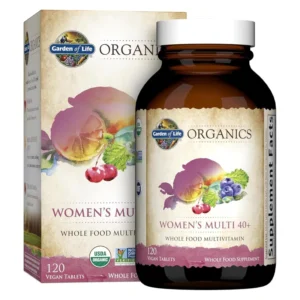
From your forties on, needs shift, more focus on bone, heart and healthy-aging support, and less need for the high iron of younger years. This organic formula is tuned for that, with B12 and vitamin D plus added botanicals, in a 120-count bottle. If you are a woman over 40 or 50 wanting a whole-food multi that fits this stage of life, this is the one to reach for.
- Tailored for women 40 and over
- Bone, heart & healthy-aging support
- Certified organic, 120-count value
Garden of Life mykind Organics Men’s 40+
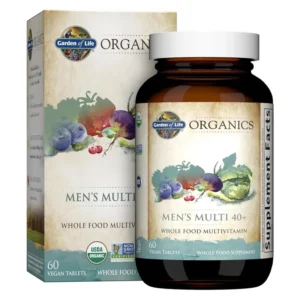
The mykind Organics line is Garden of Life’s clean, certified-organic, non-GMO range, and this men’s 40+ formula targets what matters with age: heart, prostate and energy support, from real organic foods. If you are a man over 40 who wants a premium whole-food multi without synthetic fillers, this is our pick. One of the cleanest men’s 40+ options on the shelf.
- Certified-organic mykind formula
- Heart, prostate & energy focus for 40+
- Non-GMO, no synthetic binders
Garden of Life Organics Women Once Daily
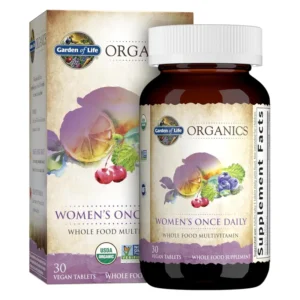
If the multi-capsule formulas feel like too much, this is the easy answer: a single organic tablet a day covering the everyday essentials, at the most affordable price in the range. It is the simplest way to build the habit, and a great low-commitment starting point. Prefer the men’s version? We also stock Organics Men Once Daily, and a larger 60-count too.
- Just one organic tablet a day
- Lowest-cost way into the range
- Men’s & 60-count versions also stocked
How to choose a multivitamin (what actually matters)
Pick for your sex and life stage first, then look at quality and form. Men’s and women’s formulas differ for good reason, most notably iron: premenopausal women generally need more, while men and postmenopausal women usually need little to none, so a men’s or 40+ formula sensibly keeps iron low. After that, the things that separate a good multi from a forgettable one are the form of the nutrients and whether you will actually take it daily.
| What to look at | Why it matters |
|---|---|
| Sex & age | Iron, calcium and dose needs differ; a women’s, men’s or 40+ formula is tuned for you. |
| Key nutrients | The ones diets most often lack: vitamin D, B12, folate, and iron for menstruating women. |
| Form | Whole-food or methylated forms can be gentler and well used; food-based multis are easier on an empty stomach. |
| Quality marks | Certified organic, non-GMO and third-party testing signal a cleaner product. |
| Will you take it? | A once-daily you actually swallow beats a four-capsule regimen you abandon. |
Why organic and whole-food multivitamins?
Whole-food multivitamins derive their nutrients from real foods rather than purely synthetic isolates, which many people find gentler on the stomach and prefer on principle. Garden of Life’s range is built around this idea: the Vitamin Code line is “raw” (uncooked, with enzymes and probiotics intact), while the mykind Organics and Organics lines are certified USDA-organic and non-GMO. Whether a food-based multi is meaningfully better absorbed than a well-made synthetic one is still debated, but if you want a clean, organic label and a formula closer to food, this is the category to look at.
Do you even need a multivitamin?
Honest answer: a healthy, varied diet covers most people’s needs, and a multivitamin is a sensible top-up rather than a must-have for everyone. It earns its place when your diet has gaps, you are over 50, follow a vegan or restricted diet, are pregnant or trying to conceive (where folate matters), or simply want insurance against the small shortfalls busy life creates. What a multivitamin is not is a fix for a poor diet or a treatment for any condition, the food on your plate does the heavy lifting, and the supplement fills the corners.
Match it to your life stage
Your twenties and a menstruating body have different needs from your fifties. Younger women often benefit from iron and folate; men and over-50s usually want low iron with more vitamin D, B12 and bone support. That is the whole reason sex- and age-specific formulas exist, and why a generic “one size fits all” multi is rarely the best fit.
If in doubt, choose the formula that names your sex and rough age bracket, it has already been balanced for the nutrients people like you most often need.
How and when to take a multivitamin
- ✓ Take it with food, ideally a meal with some fat, to help absorb the fat-soluble vitamins (A, D, E, K) and reduce stomach upset.
- ✓ Same time each day, pairing it with breakfast or another daily habit makes it stick.
- ✓ Do not double up, stick to the label dose; with vitamins, more is not better.
- ✓ Be patient, a multivitamin is about steady, long-term sufficiency, not an instant lift.
Safety & when to see a doctor
A standard multivitamin taken as directed is safe for most healthy adults, but a few cautions are worth knowing. Fat-soluble vitamins (A, D, E, K) and minerals like iron can build up or cause harm in excess, so do not stack a multivitamin with lots of separate high-dose supplements without advice, and keep products with iron away from children, as iron overdose is dangerous for them. Some vitamins (notably vitamin K and others) can interact with medicines such as blood thinners.
Talk to a doctor or pharmacist before starting a multivitamin if you are pregnant or trying to conceive (you may need a specific prenatal), take prescription medication, have a medical condition such as kidney disease, or are unsure which formula suits you. A multivitamin supports a healthy diet; it is not a treatment, and persistent symptoms of deficiency or ill health deserve a proper medical assessment rather than self-supplementing.
Multivitamin FAQ
What is the best multivitamin?
There is no single best for everyone, the right one is matched to your sex and age, made from quality ingredients, and easy enough that you take it daily. For women, a women’s formula like Garden of Life Vitamin Code is a great all-rounder; for men, an organic men’s multi; and over-40s benefit from a dedicated 40+ formula with lower iron and more bone and heart support. Consistency matters more than chasing the longest ingredient list.
What is the difference between men’s and women’s multivitamins?
The biggest difference is iron: menstruating women generally need more, while men and postmenopausal women usually need little, so men’s and 40+ formulas keep iron low. Women’s formulas often add folate and nutrients for reproductive and bone health, while men’s may emphasise prostate, heart and energy support. Choosing the formula made for your sex and age means the balance is already tuned for you.
Are organic or whole-food multivitamins better?
They are made from real foods rather than purely synthetic isolates, which many people find gentler on the stomach and prefer for a cleaner label, and certified-organic, non-GMO products avoid unwanted extras. Whether they are meaningfully better absorbed than a well-made synthetic multi is still debated. If a food-based, organic formula appeals to you and you will take it daily, it is a sound choice.
Do I really need a multivitamin?
Not necessarily, a varied, balanced diet covers most people’s needs. A multivitamin is a useful top-up if your diet has gaps, you are over 50, follow a vegan or restricted diet, are pregnant or trying to conceive, or just want insurance against small shortfalls. It is not a substitute for good food or a treatment for any condition, so think of it as filling the corners, not doing the heavy lifting.
When is the best time to take a multivitamin?
Take it with food, ideally a meal containing some fat, which helps absorb the fat-soluble vitamins and reduces the chance of stomach upset. Beyond that, take it at the same time every day, pairing it with breakfast is an easy way to remember. Do not take more than the label says; with vitamins and minerals, exceeding the dose can do more harm than good.
Can a multivitamin be harmful?
Taken as directed it is safe for most healthy adults, but fat-soluble vitamins and minerals like iron can build up or harm in excess, so avoid stacking high-dose supplements without advice, and keep iron-containing products away from children. Some vitamins can interact with medicines such as blood thinners. If you are pregnant, take medication, or have a health condition, check with a doctor before starting.
The bottom line
A multivitamin is helpful daily insurance when it is matched to you and taken consistently, not a magic pill and no substitute for real food. Choose by sex and life stage, lean toward a clean, quality formula, and pick one you will actually swallow every day. From the Garden of Life range we stock, that means Vitamin Code Women’s for women, Organics Men’s Multi for men, the 40+ formulas from your forties on, or the easy Once Daily if you want the simplest routine. Take it with food, keep to the dose, and talk to a doctor if you are pregnant, on medication, or unsure which is right for you.
Editorial & commerce note: We stock and sell the products featured here, and the buy links go to our own store. We aim to give honest, useful guidance regardless of which product you choose.
Medical disclaimer: This article is for general information only and is not medical advice. Multivitamins are dietary supplements and are not intended to diagnose, treat, cure or prevent any disease, nor to replace a balanced diet. Do not exceed the recommended dose. Keep iron-containing products out of reach of children. Consult a doctor or pharmacist before use if you are pregnant or breastfeeding, take medication (including blood thinners), or have a health condition.