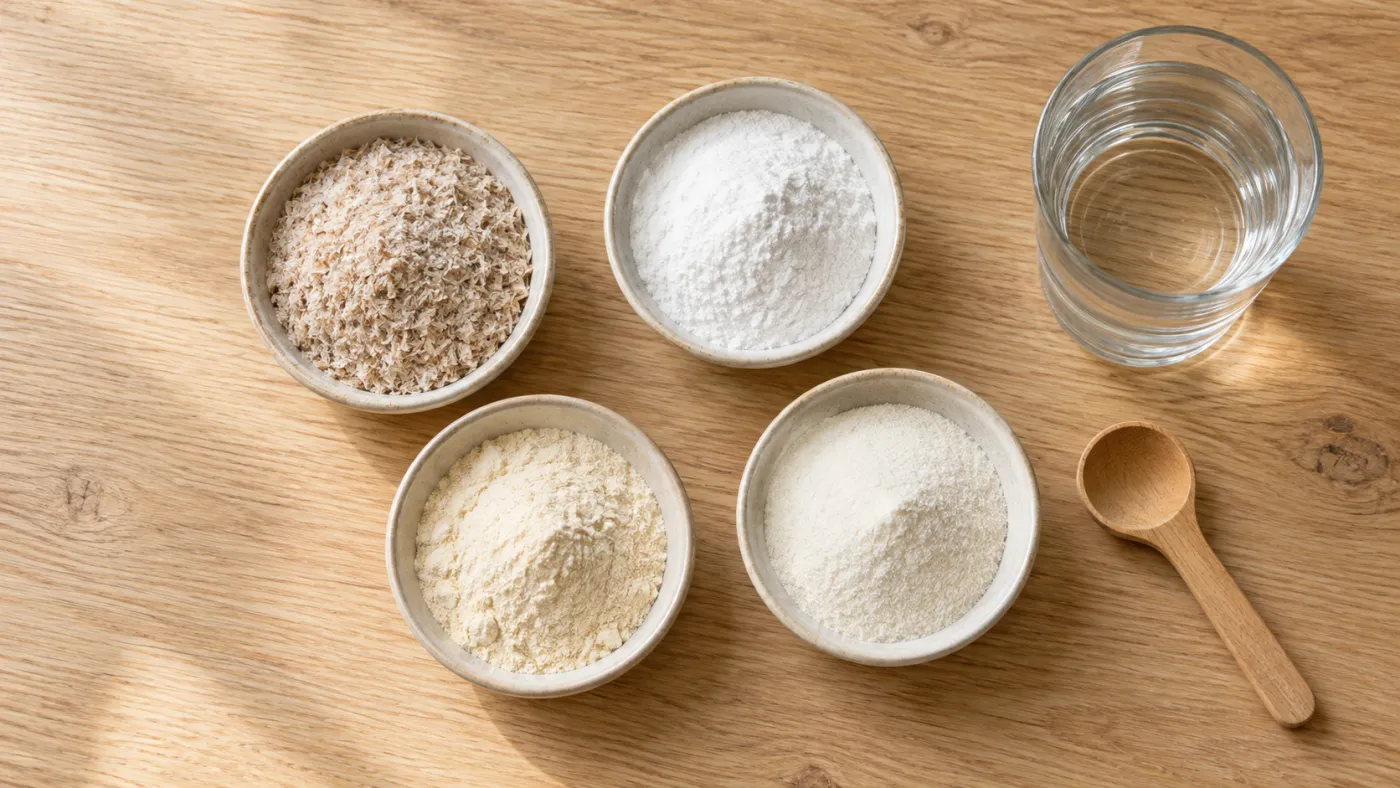
Psyllium is the fiber supplement to start with for most people, because it is the one that forms a real gel, has an FDA-authorized heart claim, and tends to cause less gas than inulin. That is the short answer. The longer one depends on what you want the fiber to do, since “fiber supplement” covers at least four very different powders sitting side by side on the same pharmacy shelf.
What is the real difference between fiber supplements?
Fiber supplements differ on two properties: whether the fiber thickens into a gel (viscosity) and whether your gut bacteria ferment it. Those two traits predict almost everything you will feel. A viscous fiber like psyllium holds water and softens stool. A fermentable fiber like inulin feeds bacteria, and bacteria make gas as they eat. Once you know which box a fiber sits in, the label stops being a mystery.
How do psyllium, inulin, methylcellulose and wheat dextrin compare?
The four common fiber supplements compare like this, based on how each one behaves rather than on marketing copy:
| Fiber | Common US brand | Forms a gel? | Fermented (gas)? | Best fit |
|---|---|---|---|---|
| Psyllium husk | Metamucil | Yes, strongly | Slowly, mild | Regularity, cholesterol support |
| Inulin / FOS (chicory root) | Many “prebiotic” powders | No | Fast, can be a lot | Feeding gut bacteria, if you tolerate it |
| Methylcellulose | Citrucel | Somewhat | No | Regularity when gas is the problem |
| Wheat dextrin | Benefiber | No, stays thin | Yes, gradually | Stirring into coffee or food unnoticed |
Acacia fiber and resistant starch are two more you will see, usually inside blended products rather than sold alone. They behave closer to wheat dextrin: soluble, low thickness, fermented at a gentler pace than inulin.
Why is psyllium the default pick?
Psyllium husk is the default because it is the only one of the four with a US heart-health claim on the books. Under FDA regulation 21 CFR 101.81, labels may state that diets low in saturated fat and cholesterol that include soluble fiber from psyllium seed husk “may” reduce the risk of heart disease, with 7 grams or more of psyllium soluble fiber per day as the qualifying amount. Note the wording. May. It is a claim about a diet pattern, not a promise from a spoonful.
Psyllium also does the practical job well. The gel it forms softens hard stool and firms up loose stool, which is why the same tub gets bought for opposite complaints. The downside is texture: psyllium thickens in the glass fast, so drink it promptly, not after answering an email.
Is inulin worth it, or just gassy?
Inulin is worth it only if your gut tolerates it, and a lot of guts do not. Monash University, the group that built the low FODMAP diet for irritable bowel syndrome, lists inulin and FOS among the rapidly fermented, high FODMAP fibers that commonly cause gas and bloating, while psyllium is rated low FODMAP at a standard serving. A 2021 study in the journal Gut, led by David Gunn at the NIHR Nottingham Biomedical Research Centre, found that adding psyllium to inulin reduced the colonic gas that inulin produced in people with IBS. So if a “gut health” powder left you inflated like a pool toy, check the label for chicory root before you blame fiber in general. Inulin hides in protein bars and greens powders too.
When does methylcellulose or wheat dextrin make more sense?
Methylcellulose makes sense when gas is your deal-breaker. The manufacturer of Citrucel states that its methylcellulose is non-fermentable, meaning gut bacteria do not break it down, so it should not add the gas that fermentable fibers can. You give up the psyllium heart claim, but for plain regularity with a sensitive gut that trade is often fine.
Wheat dextrin, sold as Benefiber, makes sense when you simply will not drink a thick glass of anything. Benefiber’s maker says the powder dissolves clear and does not thicken, so it disappears into coffee, water or soup. That convenience is the whole selling point. It is fermented, so start low, and people avoiding wheat should check the label with their doctor first.
How should you actually take a fiber supplement?
Take any bulk-forming fiber supplement with a full glass of water, start small and increase slowly. The FDA requires the labels of psyllium, methylcellulose and similar gums (21 CFR 201.319) to direct at least 8 ounces of fluid per dose and to warn that taking the product without enough liquid may cause it to swell and block the throat or esophagus. People who have trouble swallowing should not use them. This is the one rule that is not optional.
- Start with half the label dose for the first week, then build up. Your gut adapts; it just needs time.
- Space it from medicines. The Metamucil label directs taking it at least 2 hours before or after other drugs, since fiber can affect how they absorb.
- Give one fiber two or three weeks before judging it. Switching every four days tells you nothing.
- Food still counts. The Dietary Guidelines for Americans recommend 14 grams of fiber per 1,000 calories, and the USDA Economic Research Service found Americans averaged about 8.1 grams per 1,000 calories in 2017 to 2018. A supplement fills a gap; beans, oats and vegetables are the main event.
A fiber supplement is not a fix for sudden changes in bowel habits, blood in the stool, or constipation that lasts more than a week. Those need a doctor, not a bigger scoop. If you are managing occasional constipation and fiber alone is slow, a stool softener such as Dulcolax Stool Softener works differently, and it is worth asking a pharmacist which suits you. If you take several supplements, our guide to which supplements should not be taken together covers the timing clashes.
Can fiber and probiotics work together?
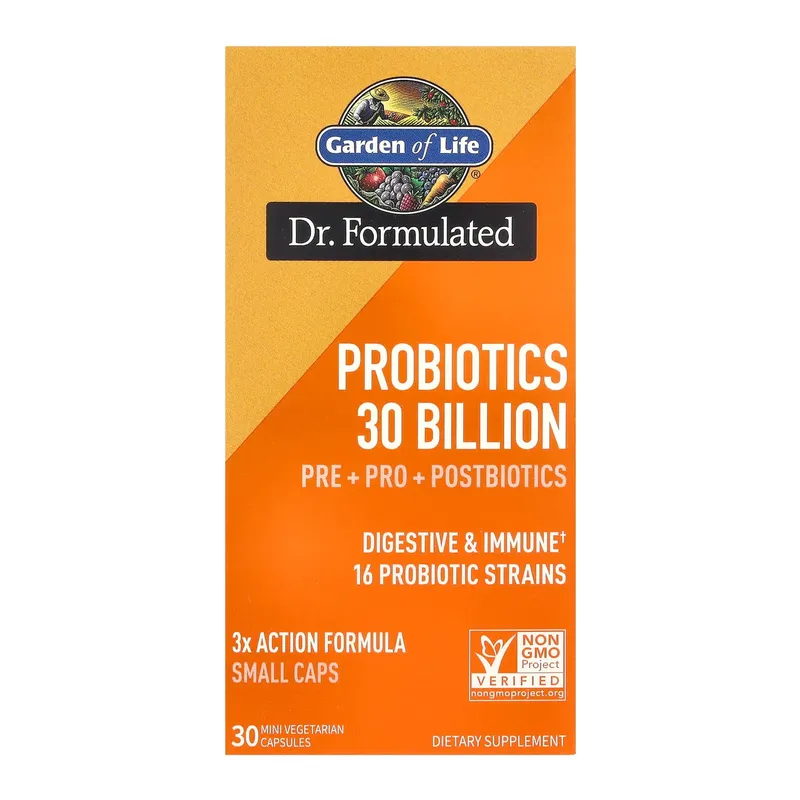
Fiber and probiotics can work together, since fermentable fibers are what many gut bacteria feed on, which is why some probiotic formulas now include a small fiber blend. Garden of Life Dr. Formulated Probiotics 30 Billion, for example, lists organic acacia fiber and potato resistant starch on its label. That is a prebiotic nudge, not a fiber dose, so it does not replace a fiber supplement. For picking the bacteria side, read our guide to probiotic strains, or browse the full gut and digestive health range.
Fiber supplement FAQ
Which fiber supplement causes the least gas?
Methylcellulose (Citrucel) is the least gassy option, since its maker states it is not fermented by gut bacteria. Psyllium is a close second for most people, and Monash University rates it low FODMAP at a standard serving. Inulin and FOS are the most likely to cause gas.
Is it safe to take psyllium every day?
Psyllium is labeled for daily use, taken with at least 8 ounces of fluid as FDA labeling rules require. Ask your doctor first if you have trouble swallowing, a bowel condition, or take prescription medicines, and keep it 2 hours apart from other drugs as the Metamucil label directs.
How much fiber should you get a day?
The Dietary Guidelines for Americans set the target at 14 grams of fiber per 1,000 calories, which works out to about 28 grams on a 2,000-calorie diet. Most of that should come from food, with a supplement covering the shortfall.
Is Benefiber the same as Metamucil?
Benefiber and Metamucil are not the same. Benefiber is wheat dextrin, which dissolves clear and stays thin. Metamucil is psyllium husk, which thickens into a gel and carries the FDA heart-health claim for psyllium soluble fiber.
This article is general information, not medical advice. Talk to your doctor or pharmacist before starting a fiber supplement, especially if you are pregnant, take medicines, or have a digestive condition.