For most adults, the melatonin dose that actually helps sleep is small: somewhere between 0.5 and 3 milligrams, taken before bed. That is less than the 5 and 10 mg gummies crowding most pharmacy shelves. More melatonin does not mean more sleep. It often just means a foggier morning.

What does melatonin actually do?
Melatonin is a timing signal, not a sedative, and that one fact explains why a huge dose rarely works better than a small one. Your brain releases melatonin as the light fades, which tells the rest of your body that night has started. A supplement adds to that signal. It does not knock you out the way a sleeping pill does.
This is why melatonin tends to shine for problems of timing. The National Center for Complementary and Integrative Health (NCCIH) reports that in people with delayed sleep-wake phase disorder, taking melatonin one hour before a set bedtime helped them fall asleep an average of 34 minutes earlier. NCCIH also notes that research suggests melatonin may help with jet lag. For long-term insomnia, the picture is weaker: the American Academy of Sleep Medicine (2017) and the American College of Physicians (2016) both concluded there is not enough strong evidence to recommend it.
How much melatonin should you start with?
Start melatonin at 0.5 to 1 mg, and only move up if that clearly does nothing after a few nights. The Sleep Foundation suggests a starting dose of about 0.5 to 1 mg taken 30 to 60 minutes before bedtime, and says doses that low can work as well as higher ones. Cleveland Clinic experts recommend 1 mg as a starting point and point out that higher doses do not necessarily lead to better sleep.
Johns Hopkins sleep expert Luis F. Buenaver puts it in three words: less is more. His suggested range is 1 to 3 mg, taken two hours before bedtime. Notice that nobody credible is telling you to open with 10 mg.
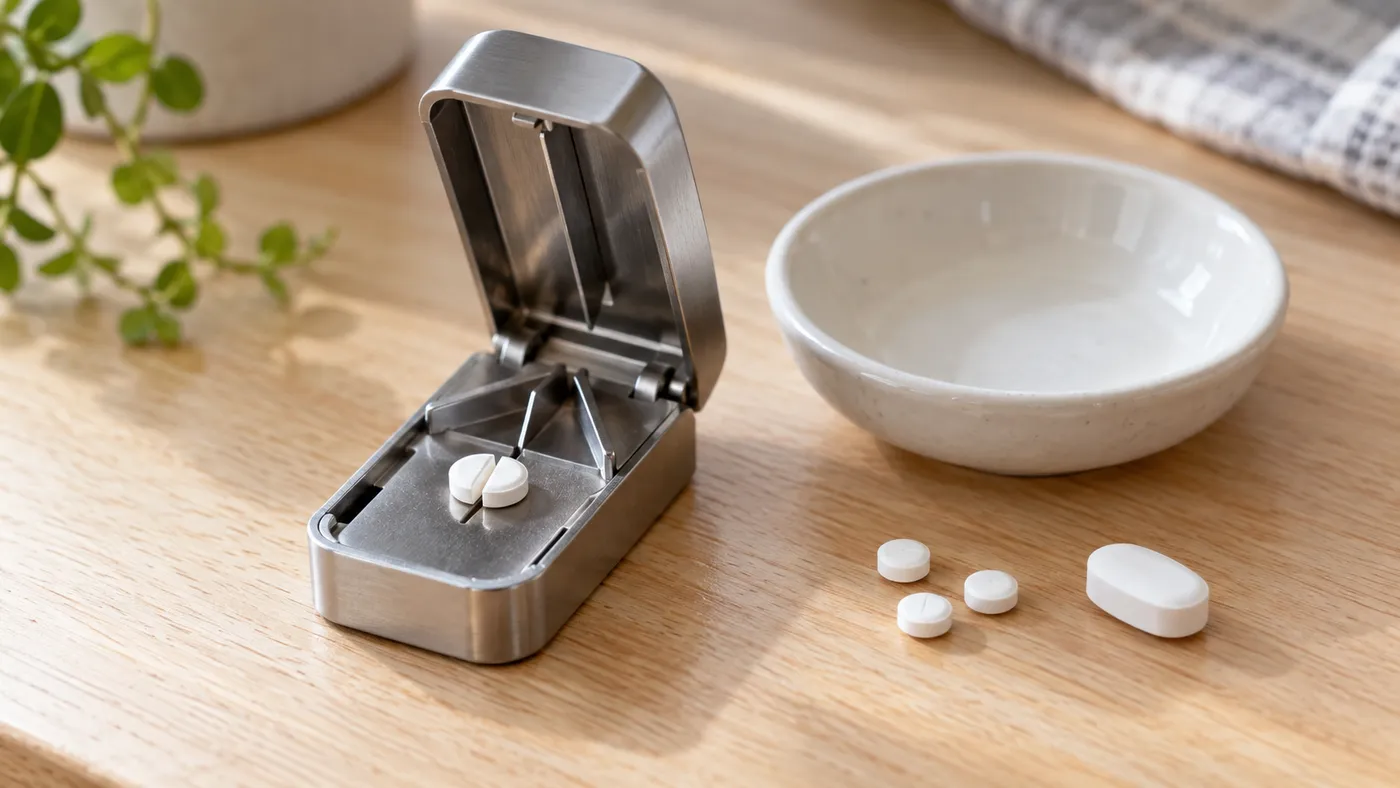
Here is the awkward part. Tiny doses are hard to buy. If your bottle only comes in 3 or 5 mg tablets, a pill splitter is the cheapest fix there is. Gummies do not split cleanly, which is one more reason to reach for a plain tablet.
Melatonin doses compared
| Dose | What the sources say | Good fit for |
|---|---|---|
| 0.5 mg | Low end of the Sleep Foundation starting range | First try, older adults (after a doctor’s okay), people sensitive to grogginess |
| 1 mg | Cleveland Clinic’s recommended starting dose | Most adults testing melatonin for the first time |
| 1 to 3 mg | Range suggested by Johns Hopkins’ Luis Buenaver | People who felt no effect at 1 mg |
| 5 mg | A dose used in some circadian rhythm disorder trials reviewed by the AASM | Diagnosed timing disorders, under a clinician’s guidance |
| 10 mg | Common on store shelves; no source above recommends it as a start | Rarely a sensible first step for you |
When should you take melatonin?
Take melatonin 30 minutes to two hours before the time you want to be asleep, not the moment you turn off the light. Because melatonin works as a signal, timing matters about as much as the dose. The Sleep Foundation’s window is 30 to 60 minutes; Buenaver at Johns Hopkins suggests two hours. Pick one time and keep it steady for a week.
Then be honest with yourself. Buenaver’s advice is to stop if melatonin is not helping after a week or two, and to talk with a health care provider if the sleep problem continues. He adds that if it does help, nightly use for one to two months is safe for most people.
Can the label on a melatonin gummy be trusted?
Melatonin gummy labels are often wrong, sometimes by a lot. A 2023 research letter in JAMA, led by Pieter Cohen of Harvard Medical School, tested 25 melatonin gummy products sold in the US. The actual melatonin ranged from 74% to 347% of what the label claimed, and 22 of the 25 were inaccurately labeled. One product contained no detectable melatonin at all, only CBD.
So a “5 mg” gummy could be delivering well over 10 mg. The reason this can happen: in the United States melatonin is sold as a dietary supplement, which NCCIH notes is regulated less strictly by the FDA than an over-the-counter drug. If you care about precise dosing, a tablet from a brand with third-party testing is the safer bet.
Who should skip melatonin or ask a doctor first?
People with epilepsy and anyone on a blood thinner should use melatonin only under medical supervision, according to NCCIH. The same agency advises anyone taking medicine to check with their health care provider first. The Sleep Foundation adds that adults over 65 should speak with a doctor before taking it. Pregnancy, breastfeeding and kids are also doctor conversations, not shelf decisions.
Keep the bottle out of reach, too. NCCIH reports that calls to US poison control centers about melatonin in people 19 and younger rose from 8,337 in 2012 to 52,563 in 2021. Candy-shaped supplements are still supplements. If you are juggling several products, our guide to which vitamins and supplements should not be taken together is worth five minutes.
What if pain is what keeps you up?
If aches are the real reason you are awake, melatonin is aimed at the wrong problem. Melatonin nudges your body clock; it does nothing for a sore back. Advil PM is a different kind of product: it pairs ibuprofen for pain with diphenhydramine citrate, a sleep aid, and the directions call for two caplets at bedtime for adults and children 12 and over. It is a drug, not a supplement, so read the Drug Facts label and do not double up with other products containing diphenhydramine. You can see the rest of our pain relief range here.
Some people also try magnesium in the evening. The evidence there is thin, and we lay out the honest version in magnesium glycinate vs citrate.
Frequently asked questions
Is 10 mg of melatonin too much?
For most adults, 10 mg of melatonin is far more than needed. Cleveland Clinic experts suggest starting at 1 mg and note that higher doses do not necessarily improve sleep. The Sleep Foundation lists daytime grogginess among the side effects of high doses. If you have been taking 10 mg, ask your doctor about stepping down.
What are the common side effects of melatonin?
NCCIH lists headache, dizziness, nausea and sleepiness as mild side effects reported in studies. Short-term use appears safe for most people, but NCCIH says long-term safety data are lacking. Do not drive if you still feel drowsy the next morning.
Does melatonin help with jet lag?
Research suggests melatonin may help with jet lag, according to NCCIH, based on reviews from 2010 and 2014. Timing it to your destination’s bedtime makes sense, since melatonin works as a clock signal.
Can I take melatonin every night?
Johns Hopkins’ Luis Buenaver says nightly melatonin for one to two months is safe for most people if it helps. Past that, or if it stops working, talk to your doctor. Ongoing insomnia usually has a cause worth finding, and a supplement can hide it for a while.