Zyrtec vs Claritin (2026): Which Allergy Medicine Is Better?
They are the two most popular 24-hour allergy pills, and the honest answer is they are both good, for slightly different people. Here is the real difference between Zyrtec and Claritin, where Flonase fits, and how to pick fast.
See the picks
The honest short version (read this first)
Zyrtec (cetirizine) tends to work a little faster and feels stronger for many people, but it makes a minority drowsy. Claritin (loratadine) is the truly non-drowsy choice for most, and is often gentler. Both are once-a-day, 24-hour antihistamines that treat sneezing, runny nose and itchy, watery eyes. If your main problem is a blocked, congested nose, neither pill is ideal, a steroid nasal spray like Flonase works better for congestion. A simple rule: pick Zyrtec for stronger, faster relief, pick Claritin if you cannot afford any drowsiness, and add or switch to Flonase if you are mostly stuffy. Many people keep two of these on hand.
Zyrtec vs Claritin vs Flonase at a glance
| Product | Active ingredient | Best for | Drowsiness | Onset |
|---|---|---|---|---|
| Zyrtec | Cetirizine 10mg | Strong, fast 24-hour relief | Possible in some (about 1 in 10) | ~1 hour |
| Claritin | Loratadine 10mg | Truly non-drowsy daily relief | Rare, non-drowsy for most | ~1 to 3 hours |
| Flonase | Fluticasone (nasal steroid) | Nasal congestion & stuffiness | None (not absorbed like a pill) | Hours to a few days |
Our allergy picks, by what you need
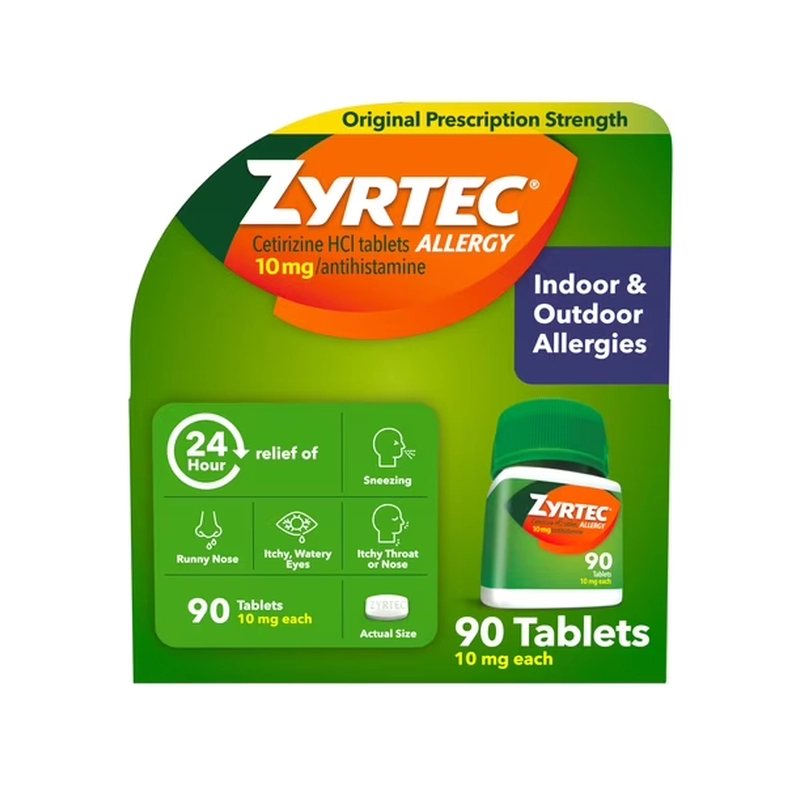
Zyrtec (Cetirizine 10mg)
Cetirizine is the antihistamine many people reach for when they want the strongest, fastest over-the-counter relief. It usually kicks in within about an hour and is excellent for sneezing, runny nose and itchy, watery eyes. The trade-off is that roughly one in ten people feel a little drowsy on it, so try it on a quiet day first.
- Often the strongest-feeling OTC antihistamine
- Fast onset, around one hour
- One tablet covers a full 24 hours
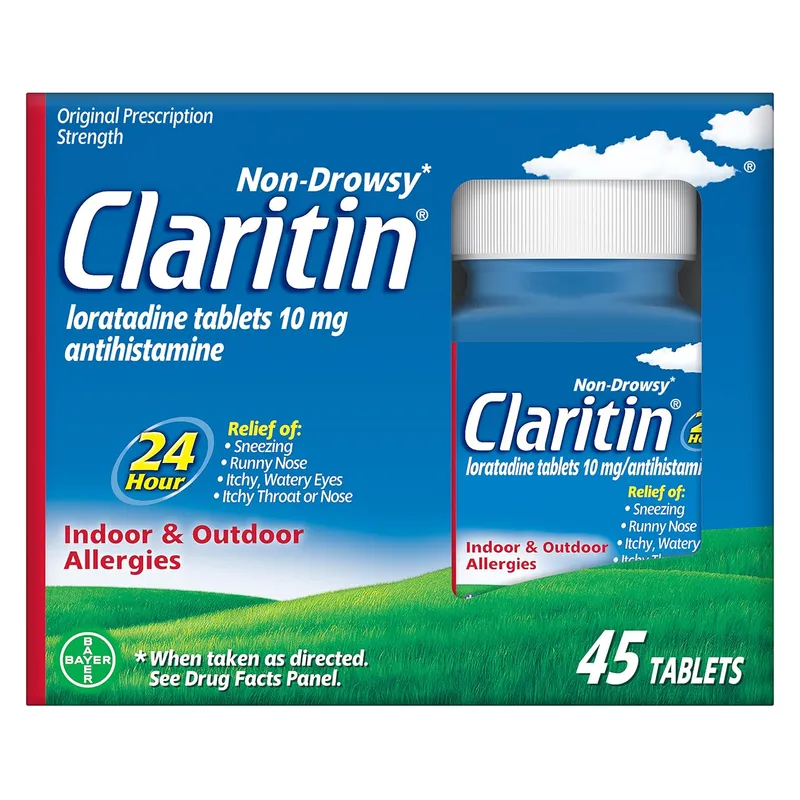
Claritin (Loratadine 10mg)
Loratadine is the go-to if you cannot afford to feel sleepy, at work, driving, or looking after kids. It is genuinely non-drowsy for most people and still covers the classic allergy symptoms for a full day. It can feel a touch milder than cetirizine and may take a little longer to start, but for everyday seasonal allergies that is a fair trade for staying sharp.
- Non-drowsy for the large majority
- Once-daily, 24-hour coverage
- Gentle, easy to take long-term in season
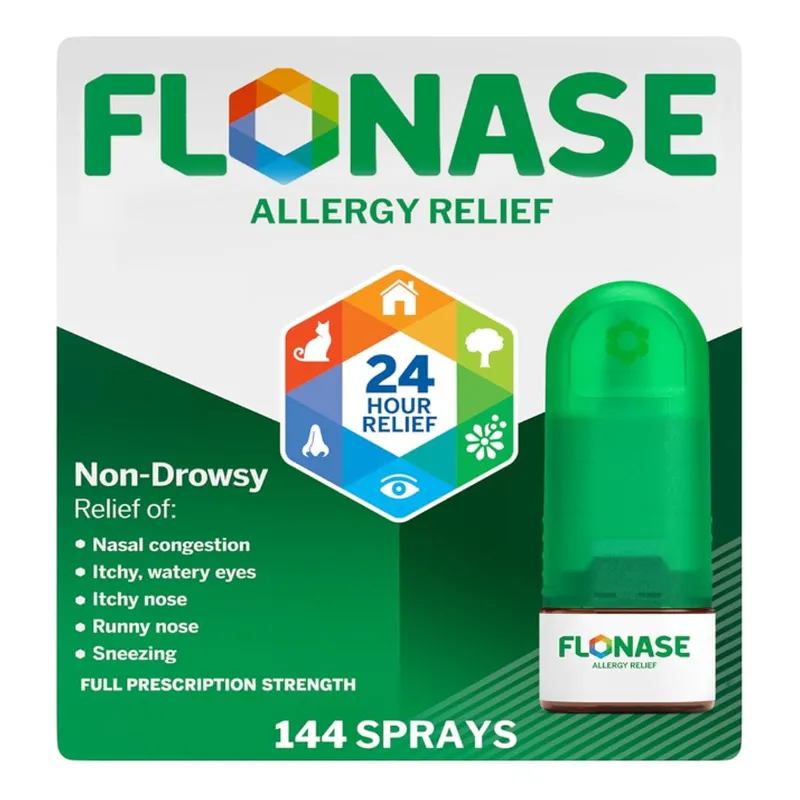
Flonase (Fluticasone nasal spray)
If your main misery is a blocked, stuffy nose, a pill is the wrong tool, antihistamines do little for congestion. Flonase is a steroid nasal spray that targets nasal inflammation and is the most effective option here for stuffiness, and it also helps sneezing, runny nose and itchy eyes. It is not instant: use it daily and give it a few days to reach full effect.
- The best of these three for a congested nose
- Covers the full range of nasal allergy symptoms
- Works best used every day, in advance of triggers
Zyrtec vs Claritin: the real difference
Both Zyrtec and Claritin are second-generation antihistamines, both are taken once a day, and both treat the same core symptoms, so the choice comes down to strength versus drowsiness. Cetirizine (Zyrtec) tends to be a little more potent and faster, often within an hour, which is why many people feel it works best. The catch is that a minority, around one in ten, notice some drowsiness. Loratadine (Claritin) is the more reliably non-drowsy of the two and can be slightly milder, with an onset that may take one to three hours.
For most seasonal allergy sufferers, either will do the job. If you want the strongest relief and do not mind testing how it affects you, start with Zyrtec. If staying fully alert matters most, Claritin is the safer bet. There is no harm in keeping both and matching the pill to the day.
A pill treats the wrong thing if you are just congested
The single most common mistake is taking antihistamine after antihistamine for a blocked nose. Oral allergy pills are great for sneezing, itch and runny nose, but they barely touch congestion.
If stuffiness is your main complaint, a steroid nasal spray like Flonase, used daily, will usually outperform any tablet, and you can still take Zyrtec or Claritin alongside it.
Claritin-D vs Zyrtec-D: what the “D” changes
The “-D” versions add a decongestant (pseudoephedrine) to the antihistamine, which helps a stuffy nose but comes with real cautions. Claritin-D and Zyrtec-D pair loratadine or cetirizine with the same decongestant, so the antihistamine difference is the same as the regular versions, and the decongestant is what clears congestion. Because pseudoephedrine can raise blood pressure, speed up the heart and disrupt sleep, the “-D” products are kept behind the pharmacy counter and are not right for everyone, especially if you have high blood pressure, heart problems, or take certain medications. If congestion is the issue, many people do better with a daily Flonase than with a “-D” pill. Ask your pharmacist.
What about Allegra, Benadryl and Xyzal?
These come up constantly in the comparison, so here is how each one fits, we are expanding our allergy range over time:
- ✓ Allegra (fexofenadine) is another non-drowsy once-daily option, similar in spirit to Claritin; some people find it agrees with them better. Avoid taking it with fruit juice, which can reduce absorption.
- ✓ Benadryl (diphenhydramine) is an older, first-generation antihistamine. It works but is strongly sedating and only lasts a few hours, so it is not a good daily allergy choice, keep it for occasional use.
- ✓ Xyzal (levocetirizine) is closely related to cetirizine (Zyrtec) and is often taken in the evening; it can also cause some drowsiness for the same reason.
How to choose in 10 seconds
- ✓ Want the strongest, fastest relief and can test for drowsiness? Start with Zyrtec.
- ✓ Need to stay fully alert for work or driving? Choose Claritin.
- ✓ Mostly blocked and stuffy? Use Flonase daily, on its own or with a pill.
- ✓ One pill is not cutting it? It is usually fine to combine a daily antihistamine with Flonase, but check with your pharmacist first.
You can browse all of these in our allergy & immune support range.
Safety & when to see a doctor (do not skip this)
These are well-established over-the-counter medicines, but they are still medicines. Take only one dose a day as directed and do not double up by combining two antihistamines. Cetirizine (Zyrtec) can cause drowsiness in some people, so see how it affects you before driving or drinking alcohol on it. The “-D” decongestant versions are not suitable if you have high blood pressure, heart disease, thyroid problems or take certain medications, ask the pharmacist. Children need the correct child-specific product and dose for their age, and anyone who is pregnant or breastfeeding, or who takes regular medication, should check first. See a doctor if your allergies are not controlled by an over-the-counter option, if you have sinus pain or symptoms lasting weeks, or if you may have asthma.
Zyrtec vs Claritin FAQ
Which is better, Zyrtec or Claritin?
Neither is universally better, they suit different people. Zyrtec (cetirizine) tends to feel stronger and works a bit faster, but a minority feel drowsy on it. Claritin (loratadine) is the more reliably non-drowsy choice and can be slightly milder. For strong, fast relief start with Zyrtec; if staying fully alert matters most, choose Claritin. Many people keep both.
Is Zyrtec or Claritin stronger?
For most people cetirizine (Zyrtec) feels a little stronger and faster than loratadine (Claritin), which is why some prefer it on high-pollen days. The trade-off is a higher chance of mild drowsiness. If you do not notice any benefit from one, it is reasonable to try the other, as individual responses vary.
Can you take Zyrtec and Claritin together?
You should not double up on two oral antihistamines at the same time, as it increases side effects without much added benefit. If one pill is not enough, the usual next step is to add a steroid nasal spray like Flonase, which works differently, rather than stacking antihistamines. Check with your pharmacist before combining anything.
Which allergy medicine is the most non-drowsy?
Among these, Claritin (loratadine) is the most reliably non-drowsy for daily use, and Allegra (fexofenadine) is similar. Zyrtec (cetirizine) is non-drowsy for most but causes mild sleepiness in about one in ten people. Flonase is a nasal spray and does not cause the drowsiness associated with antihistamine pills.
What is the difference between Claritin-D and Zyrtec-D?
Both add the decongestant pseudoephedrine to the antihistamine, so the only difference between them is loratadine (Claritin-D) versus cetirizine (Zyrtec-D), the same as the regular versions. The decongestant helps a stuffy nose but can raise blood pressure and disturb sleep, which is why the “-D” products are kept behind the pharmacy counter and are not right for everyone.
How fast does each one work?
Zyrtec (cetirizine) usually starts working within about an hour. Claritin (loratadine) can take one to three hours. Flonase is not fast at all, it is a daily nasal spray that builds up over a few days, so it works best when used regularly rather than as a quick fix.
The bottom line
Zyrtec and Claritin are both excellent 24-hour allergy pills, the right one depends on you. Pick Zyrtec for the strongest, fastest relief if you can test for drowsiness, pick Claritin if staying fully alert is non-negotiable, and reach for Flonase if your real problem is a blocked, congested nose. Whatever you choose, take one a day as directed, mind the drowsiness on cetirizine, and ask your pharmacist about the “-D” versions. For most allergy seasons, one of these three, or a sensible combination, is all you need.
Editorial & commerce note: We stock and sell the products featured here, and the buy links go to our own store. We aim to give honest, useful comparisons regardless of which product you choose.
Medical disclaimer: This article is for general information only and is not medical advice. Over-the-counter medicines should be used strictly according to their label. This content does not replace guidance from a pharmacist or doctor. Consult a healthcare professional about which allergy treatment is right for you, especially if you are pregnant or breastfeeding, treating a child, have a health condition such as high blood pressure, heart disease or asthma, or take other medications. Seek emergency care for any signs of a severe allergic reaction.