Move Free Review: Does Glucosamine for Joints Actually Work?
Move Free is one of the best-known joint supplements, built on glucosamine. Here is an honest look at what is inside it, what the evidence really says about glucosamine, who it tends to help, and how to choose between the formulas.
See the pick
The honest short version (read this first)
Move Free is a glucosamine-based joint supplement, and the honest truth about glucosamine is that the evidence is mixed: some people get real relief, while large trials show only modest benefit, sometimes no better than placebo, for many. It is generally safe to try for a couple of months to see if you are a responder, especially for mild to moderate joint discomfort, but it is not a cure for arthritis. The everyday choice we stock is Move Free Advanced Plus MSM & Vitamin D3, which adds MSM and vitamin D to the glucosamine-chondroitin base at a very fair price.
Our Move Free pick
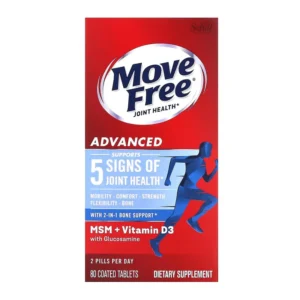
Move Free Advanced Plus MSM & Vitamin D3
This is the sensible Move Free to start with: the classic glucosamine and chondroitin base, plus MSM and vitamin D3 for joint and bone support, in an 80-count bottle at a genuinely low price. If you want to give glucosamine a fair trial without spending much, this is the one. Take it consistently for two to three months and judge how your joints feel over that time, not in the first week.
- Glucosamine + chondroitin + MSM + vitamin D3
- 80-count at an excellent everyday price
- A low-cost way to trial glucosamine fairly
What is Move Free?
Move Free is a popular range of joint-health supplements, best known for its glucosamine and chondroitin formulas. Glucosamine and chondroitin are building blocks naturally found in cartilage, the cushioning tissue in your joints, and the idea behind supplementing them is to support joint comfort, flexibility and mobility. The Advanced line pairs them with MSM (a sulphur compound) and, in this version, vitamin D3 for bone support. There is also a separate Move Free Ultra line that takes a different route entirely, which we cover below.
Does glucosamine actually work?
This is where honesty matters: the evidence for glucosamine is genuinely mixed. Some people report meaningful relief in joint comfort, and certain studies, particularly on glucosamine sulphate, suggest a modest benefit. But large, well-run trials have often found glucosamine works no better than a placebo for the average person, especially for mild symptoms. The picture is a little more favourable for moderate-to-severe knee discomfort, where some people do seem to respond.
The practical takeaway is that glucosamine is a reasonable, low-risk thing to try, because it is inexpensive and safe for most people, but you should go in with realistic expectations. Give it a fair trial of two to three months; if your joints feel better, you may be a responder and it is worth continuing, and if nothing has changed, it is fine to stop. What glucosamine is not is a cure for arthritis or a rebuilder of worn cartilage.
What is inside: the ingredients explained
| Ingredient | What it is & why it is there |
|---|---|
| Glucosamine | A natural building block of cartilage; the core joint-support ingredient. |
| Chondroitin | Another cartilage component, often paired with glucosamine to support cushioning. |
| MSM | A sulphur compound included for joint comfort support. |
| Vitamin D3 | Supports healthy bones, which work alongside your joints. |
| Hyaluronic acid (in some formulas) | A component of joint fluid, for lubrication support. |
Important to know: most glucosamine, including in Move Free, is derived from shellfish, which matters if you have a shellfish allergy (see the safety section).
Move Free Advanced vs Move Free Ultra
The two main Move Free lines take different approaches, so the choice comes down to what you prefer. Move Free Advanced (our pick above) is the classic glucosamine-and-chondroitin formula, often with MSM and vitamin D added, taken as a couple of tablets a day. Move Free Ultra drops glucosamine entirely and instead uses type II collagen, boron and hyaluronic acid in a single tiny pill a day, which appeals to people who dislike large tablets or have not got on with glucosamine.
| Move Free Advanced | Move Free Ultra | |
|---|---|---|
| Key ingredients | Glucosamine, chondroitin, MSM, D3 | Type II collagen, boron, hyaluronic acid |
| Pills per day | Usually two tablets | One small pill |
| Best for | Trying the classic glucosamine approach, on a budget | Those who want a tiny pill or no glucosamine |
If you are new to joint supplements and want the most-studied, lowest-cost option, start with Move Free Advanced Plus. If glucosamine has not worked for you before, or you struggle with large tablets, the Ultra line is the one to look out for.
How to take it, and how long
- ✓ Follow the label dose, usually two tablets a day for the Advanced formula, taken with food.
- ✓ Be consistent, take it daily; the effect, if you get one, builds over weeks.
- ✓ Give it 2 to 3 months before deciding whether it helps you.
- ✓ Pair it with the basics, gentle movement, a healthy weight to reduce joint load, and strengthening exercise.
Pair it with omega-3
Many people who take a joint supplement also take omega-3, the anti-inflammatory fats that support joint comfort from a different angle. The two are complementary, not competing.
If that interests you, see our krill oil vs fish oil guide for how to choose an omega-3, and remember that the biggest wins for your joints are still movement and a healthy weight.
Side effects & safety
Glucosamine and Move Free are generally well tolerated, with the most common side effects being mild, things like an upset stomach, heartburn or nausea. But there are a few specific cautions worth knowing before you start.
- ✓ Shellfish allergy: most glucosamine is made from shellfish, so avoid it, or seek a shellfish-free version, if you are allergic.
- ✓ Diabetes: glucosamine may affect blood sugar in some people, so monitor and check with your doctor.
- ✓ Blood thinners: glucosamine and chondroitin can interact with warfarin and increase bleeding risk, talk to your doctor first.
- ✓ Pregnancy/breastfeeding: not enough evidence, so avoid unless your doctor advises otherwise.
When to see a doctor
A joint supplement is for everyday, mild-to-moderate joint comfort, not for diagnosing or treating joint disease. See a doctor if your joint pain is severe or persistent, if a joint is noticeably swollen, hot or red, if it gives way, locks or will not bear weight, if pain follows an injury, or if it is steadily worsening despite the basics. These can point to arthritis or other conditions that benefit from proper treatment, and the earlier they are assessed, the better the options. A supplement should never delay getting persistent or severe joint problems checked.
Move Free & glucosamine FAQ
Does Move Free actually work?
It depends on the person. Move Free is built on glucosamine, and the evidence for glucosamine is mixed: some people get real relief, while large trials often show only modest benefit, sometimes no better than placebo, particularly for mild symptoms. It is a low-risk, inexpensive thing to try for two to three months to see whether you respond, but it is not a cure for arthritis.
How long does Move Free take to work?
If it is going to help you, the benefit builds over weeks rather than days, so give it a fair trial of two to three months of consistent daily use before deciding. Take it as directed, usually with food, and judge how your joints feel over that period. If nothing has changed after a couple of months, it is reasonable to stop.
What is the difference between Move Free Advanced and Ultra?
Move Free Advanced is the classic glucosamine-and-chondroitin formula, often with MSM and vitamin D, taken as a couple of tablets a day. Move Free Ultra contains no glucosamine; instead it uses type II collagen, boron and hyaluronic acid in one small pill a day. Advanced is the most-studied, lowest-cost route; Ultra suits people who want a tiny pill or have not got on with glucosamine.
Is glucosamine safe?
For most people, yes, side effects are usually mild, like stomach upset. But most glucosamine is derived from shellfish, so avoid it if you have a shellfish allergy. It may affect blood sugar in people with diabetes, and it can interact with the blood thinner warfarin to increase bleeding risk. If any of those apply, or you are pregnant or breastfeeding, check with your doctor first.
Can I take Move Free with omega-3 or other supplements?
Many people pair a joint supplement with omega-3, which supports joint comfort in a different way, and the two are complementary. As with any combination, keep each within its recommended dose and check with a pharmacist or doctor if you take several supplements or any medication, especially blood thinners, since both glucosamine and omega-3 can have mild blood-thinning effects.
Do I still need to exercise if I take a joint supplement?
Yes, and it matters more than the supplement. The best-supported things for joint health are staying active with gentle, regular movement, strengthening the muscles around the joint, and maintaining a healthy weight to reduce the load on it. A supplement like Move Free is a low-cost add-on to those habits, not a replacement for them.
The bottom line
Move Free is a sensible, low-cost way to try glucosamine for your joints, as long as you keep expectations realistic. The evidence for glucosamine is mixed, some people genuinely respond and others notice nothing, so treat it as a two-to-three-month trial rather than a guaranteed fix or a cure for arthritis. The everyday option we stock, Move Free Advanced Plus MSM & Vitamin D3, gives you the classic formula at a fair price. Pair it with movement and a healthy weight, mind the shellfish-allergy, diabetes and blood-thinner cautions, and see a doctor for severe, swollen or worsening joints.
Editorial & commerce note: We stock and sell the Move Free products featured here, and the buy links go to our own store. We aim to give honest, useful guidance regardless of which product you choose.
Medical disclaimer: This article is for general information only and is not medical advice. Joint supplements are dietary supplements and are not intended to diagnose, treat, cure or prevent any disease, including arthritis. Most glucosamine is derived from shellfish. Consult a doctor or pharmacist before use if you have a shellfish allergy, diabetes, take blood thinners such as warfarin, are pregnant or breastfeeding, or have a health condition. See a doctor for severe, swollen, or worsening joint pain.