Advil vs Tylenol: Which Pain Reliever Should You Take?
They treat pain in completely different ways, and picking the right one matters. Here is an honest comparison of Advil (ibuprofen) and Tylenol (acetaminophen), how each stacks up against Aleve and Motrin, whether you can combine them, and the Advil we stock.
See the Advil picks
The honest short version (read this first)
Advil (ibuprofen) is an anti-inflammatory (an NSAID); Tylenol (acetaminophen) is not. That one fact drives the choice. Advil is usually better for pain with inflammation, sprains, muscle and joint aches, dental and period pain, because it tackles the swelling too. Tylenol is often the safer pick for plain headaches and fever, and for people who cannot take NSAIDs (stomach, kidney, heart or bleeding issues), because it is gentler on the stomach, though it must not be overdosed as it can harm the liver. You can take the two together or alternate them, since they work differently, but you should never double up on two NSAIDs. Of the Advil we stock, the Coated Caplets are the everyday choice and the Liquid-Gels are the faster-acting one.
Advil, Tylenol & Aleve at a glance
| Advil | Tylenol | Aleve | |
|---|---|---|---|
| Active ingredient | Ibuprofen | Acetaminophen | Naproxen |
| Type | NSAID (anti-inflammatory) | Not an NSAID | NSAID (anti-inflammatory) |
| Best for | Inflammation, muscle/joint, dental, period pain | Headache, fever, when NSAIDs are off-limits | Longer-lasting inflammation pain |
| Lasts | 4–6 hours | 4–6 hours | Up to 12 hours |
| Main caution | Stomach, kidney, heart (NSAID) | Liver (in overdose) | Same as Advil, NSAID |
The Advil we stock
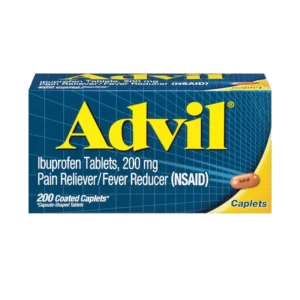
Advil Ibuprofen 200mg, 200 Coated Caplets
The standard Advil and the one to keep in the cupboard: 200 mg ibuprofen in an easy-to-swallow coated caplet, in a large 200-count bottle that lasts and works out as good value per dose. Ideal for everyday aches, headaches, muscle and joint pain, and period pain where the anti-inflammatory action helps. Take with food and stick to the label dose.
- Standard 200 mg ibuprofen caplets
- Large 200-count, great value per dose
- Smooth coating, easy to swallow
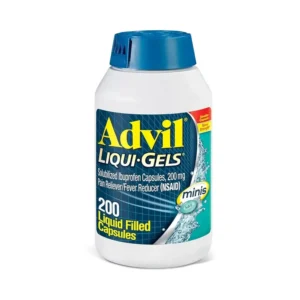
Advil Liquid-Gels 200mg, 200 Mini Liquid-Caps
Liquid-Gels hold the ibuprofen already dissolved in liquid, so it can be absorbed faster than a standard tablet, handy when you want relief to kick in sooner, such as a bad headache or acute pain. These are the mini size, easier to swallow, also in a generous 200-count. Same 200 mg dose and rules as the caplets, just a faster-feeling format.
- Liquid form for faster absorption
- Mini caps, easier to swallow
- 200-count, same 200 mg ibuprofen dose
Advil vs Tylenol: the key difference
Advil is ibuprofen, a non-steroidal anti-inflammatory drug (NSAID); Tylenol is acetaminophen, which relieves pain and fever but is not an anti-inflammatory. That is the whole story in one line. Advil reduces the inflammation behind a lot of pain, swelling, sprains, arthritis flares, muscle strains, dental and menstrual pain, so it often works better when something is inflamed. Tylenol works mainly in the brain to dull pain signals and lower fever, without touching inflammation.
The trade-off is safety profile. Advil, like all NSAIDs, can irritate the stomach, affect the kidneys, raise blood pressure and carry heart risks with heavy or long-term use, so it is taken with food and not suited to everyone. Tylenol is gentler on the stomach and is often the go-to when NSAIDs are off-limits, but its catch is the liver: exceeding the daily limit, or combining it with alcohol, can cause serious liver damage. Respect each drug’s ceiling and they are both very useful.
Advil vs Aleve vs Motrin: where they fit
Motrin is the same drug as Advil (both are ibuprofen), so there is no real difference, choose on price. Aleve is naproxen, also an NSAID like Advil, but longer-lasting: one dose can cover up to 12 hours versus 4 to 6 for ibuprofen, which makes Aleve convenient for all-day or all-night pain, while Advil is easier to fine-tune for shorter bouts. Because Advil, Motrin and Aleve are all NSAIDs, they share the same stomach, kidney and heart cautions, and you should never take two of them at once.
| Product | Active ingredient | Notes |
|---|---|---|
| Advil | Ibuprofen | NSAID, 4–6 hours, easy to dose |
| Motrin | Ibuprofen | Same as Advil, different brand |
| Aleve | Naproxen | NSAID, longer-lasting (up to 12 hours) |
| Tylenol | Acetaminophen | Not an NSAID; for pain & fever, gentler on stomach |
Which is best for your pain?
- ✓ Headache: either works; many reach for Tylenol first, Advil if inflammation or tension is involved.
- ✓ Muscle & joint pain, sprains, arthritis: Advil (or Aleve), the anti-inflammatory action helps.
- ✓ Period pain: Advil, ibuprofen targets the inflammatory cramping.
- ✓ Dental & back pain: Advil usually, for the inflammation.
- ✓ Fever: both lower fever; Tylenol is a common first choice, especially if the stomach is sensitive.
- ✓ If you cannot take NSAIDs: Tylenol, when stomach, kidney, heart or bleeding issues rule out Advil.
Can you take Advil and Tylenol together?
Yes, for most adults Advil and Tylenol can be taken together or alternated, because they are different drugs that work in different ways, and combining them does not double up on either one’s risk. This is a common approach for stronger pain: take them at the same time, or stagger them (for example Advil, then Tylenol a few hours later) for more continuous cover. The golden rule is to keep each within its own daily limit and never combine two NSAIDs, do not take Advil with Aleve, Motrin or aspirin for pain. If you are doing this often or for more than a day or two, check with a pharmacist or doctor.
How to take Advil safely
- ✓ Take with food or milk to protect your stomach.
- ✓ Use the lowest dose that works, for the shortest time. The usual adult dose is one 200 mg caplet every 4–6 hours; do not exceed the label’s daily maximum without a doctor.
- ✓ It works in 20–30 minutes and lasts about 4–6 hours.
- ✓ Do not use it for more than 10 days for pain, or 3 days for fever, without seeing a doctor.
Lowest dose, shortest time
NSAIDs like Advil are excellent for short-term pain, but their risks climb with higher doses and longer use. The safest way to use ibuprofen is the smallest amount that controls your pain, for as few days as you need it.
If you find yourself needing it daily for weeks, that is a sign to see a doctor rather than keep self-treating, ongoing pain deserves a proper diagnosis, and there may be a safer long-term plan.
Is Advil a blood thinner? Is it an anti-inflammatory?
Advil is an anti-inflammatory, and it does have a mild, temporary blood-thinning effect, though it is not a true anticoagulant like warfarin. Ibuprofen makes platelets a little less sticky while it is in your system, which is why it can increase bleeding risk, especially if you already take a blood thinner or aspirin, or have a bleeding disorder. Unlike aspirin’s effect, ibuprofen’s wears off as the drug clears. If you are on any blood-thinning medication, talk to your doctor or pharmacist before using Advil, and consider Tylenol, which does not have this effect, instead.
Side effects & when to see a doctor (do not skip this)
Used occasionally and as directed, Advil is safe for most adults, but as an NSAID it carries real risks that are worth respecting. The most common side effects are stomach upset, heartburn and nausea. More serious, especially with high doses or long-term use, are stomach ulcers and bleeding, kidney problems, raised blood pressure, and an increased risk of heart attack and stroke. Take it with food, at the lowest effective dose, for the shortest time.
Avoid Advil, or check with a doctor first, if you have a history of stomach ulcers or bleeding, kidney disease, heart failure or heart disease, uncontrolled high blood pressure, are in the third trimester of pregnancy, take blood thinners or certain blood-pressure medicines, or are over 65. In those situations Tylenol is often the safer choice. Always see a doctor for pain that is severe, unexplained, or not improving, rather than simply taking more.
Advil & Tylenol FAQ
Is Advil the same as ibuprofen?
Yes. Advil is a brand name for ibuprofen, a non-steroidal anti-inflammatory drug (NSAID). Generic ibuprofen and other brands like Motrin contain the same active ingredient at the same over-the-counter 200 mg strength, so they work the same way. The main differences between brands are price, coating and format, not the medicine itself.
Advil or Tylenol, which is better?
It depends on the pain. Advil (ibuprofen) is an anti-inflammatory, so it is usually better for muscle, joint, dental and period pain and anything inflamed. Tylenol (acetaminophen) is not an anti-inflammatory but is gentler on the stomach and a common choice for headaches, fever, and for people who cannot take NSAIDs. Match the drug to the problem and to your own health.
Can you take Advil and Tylenol together?
For most adults, yes. They are different drugs that work in different ways, so they can be taken together or alternated for stronger or more continuous relief, while keeping each within its own daily limit. What you must not do is combine two NSAIDs, do not take Advil with Aleve, Motrin or aspirin for pain. If you are doing this regularly, check with a pharmacist or doctor.
How often can you take Advil?
The usual adult dose is one 200 mg caplet every 4 to 6 hours as needed, with food, and you should not exceed the maximum daily amount on the label without a doctor’s advice. Use the lowest dose that controls your pain, and do not take Advil for more than 10 days for pain or 3 days for fever without seeing a doctor.
Is Advil a blood thinner?
It has a mild, temporary blood-thinning effect but is not a true anticoagulant like warfarin. Ibuprofen makes platelets slightly less sticky while it is in your body, which can raise bleeding risk, particularly if you take a blood thinner or aspirin or have a bleeding disorder. The effect wears off as the drug clears. If you are on blood thinners, ask your doctor before using Advil and consider Tylenol instead.
How long does Advil take to work and how long does it last?
Advil usually starts working within about 20 to 30 minutes, and the liquid-gel form can feel a little faster because the ibuprofen is already dissolved. One dose typically lasts around 4 to 6 hours. If your pain returns sooner than that or is not controlled at the recommended dose, do not simply take more, speak to a pharmacist or doctor.
The bottom line
Advil and Tylenol are both excellent, but for different reasons: Advil (ibuprofen) is an anti-inflammatory, best for inflamed, muscular, dental and period pain; Tylenol (acetaminophen) is not, but is gentler on the stomach and the safer pick for plain headaches, fever, or when NSAIDs are off-limits. You can combine or alternate the two, but never stack two NSAIDs. Whichever you choose, use the lowest effective dose for the shortest time, take Advil with food, and see a doctor for severe or lasting pain. Of the Advil we stock, the Coated Caplets are the everyday staple and the Liquid-Gels are the faster-acting option.
Editorial & commerce note: We stock and sell the Advil products featured here, and the buy links go to our own store. We aim to give honest, useful guidance regardless of which product you choose.
Medical disclaimer: This article is for general information only and is not medical advice. Advil (ibuprofen) and Tylenol (acetaminophen) are medicines; always read and follow the label and do not exceed the stated dose. Ibuprofen is an NSAID and is not suitable for everyone. Consult a doctor or pharmacist before use if you have stomach, kidney, heart or bleeding problems, high blood pressure, are pregnant or breastfeeding, are over 65, or take other medication including blood thinners. Seek urgent care for signs of stomach bleeding, heart attack, stroke or allergic reaction.