Krill Oil vs Fish Oil: Which Omega-3 Is Better?
Both deliver the omega-3s EPA and DHA, but they are not identical. Here is an honest comparison of krill oil and fish oil, who each one suits, and the MegaRed krill, fish and combined formulas we stock so you can pick the right one.
See the picks
The short version (read this first)
Krill oil and fish oil both supply the key omega-3s (EPA and DHA); the difference is in form, absorption and dose. Krill oil’s omega-3s come attached to phospholipids, which may absorb a little more readily, and it contains the antioxidant astaxanthin, often with smaller, easier softgels and less fishy repeat. Fish oil is cheaper per gram of omega-3 and makes it easier to hit a high EPA/DHA dose. For most people either is fine, the best omega-3 is the one you will take daily. For pure krill we like MegaRed Extra Strength Krill Oil; for the best of both, MegaRed Advanced Ultra Strength Fish & Krill; and for a higher-dose, better-absorbed fish oil, MegaRed Omega-3 Fish Oil 6x.
Best MegaRed omega-3, at a glance
| Product | Best for | Type | Price |
|---|---|---|---|
| MegaRed Extra Strength Krill Oil | Best krill oil | Pure krill, 80 ct | $29.99 |
| MegaRed Advanced Ultra Strength Fish & Krill | Best of both | Fish + krill, 40 ct | $24.99 |
| MegaRed Omega-3 Fish Oil 6x | Best fish oil | Fish oil, 80 ct | $37.49 |
| MegaRed Omega-3 Krill Oil 60ct | Best value krill | Pure krill, 60 ct | $17.49 |
| MegaRed Omega-3 Complex Fish & Krill | Best everyday combo | Fish + krill, 80 ct | $27.99 |
Our MegaRed picks, by what you want
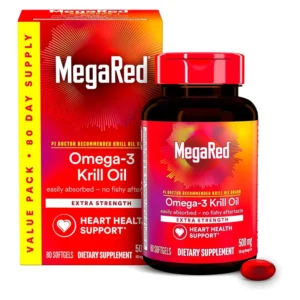
MegaRed Extra Strength Omega-3 Krill Oil
If you specifically want krill oil, this is our pick: an extra-strength dose of pure Antarctic krill in MegaRed’s signature small, no-fishy-repeat softgel, with naturally occurring astaxanthin. The 80-count is a near three-month supply at one a day, so it works out as sensible value for a premium krill product. A clean, simple once-daily omega-3 for everyday heart and cellular support.
- Pure Antarctic krill, extra-strength dose
- Small softgel, no fishy aftertaste
- 80-count, roughly a 3-month supply
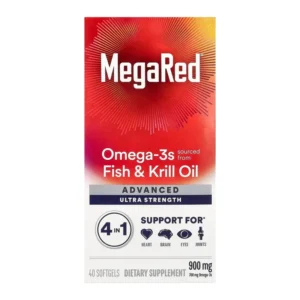
MegaRed Advanced Ultra Strength Fish & Krill Oil
Cannot decide between krill and fish? This is the answer: MegaRed’s ultra-strength formula combines both, so you get the well-absorbed, astaxanthin-rich omega-3s from krill alongside the higher EPA/DHA punch of fish oil in a single softgel. It is our top all-rounder for anyone who just wants the most complete omega-3 without overthinking the krill-versus-fish question.
- Krill + fish oil in one ultra-strength softgel
- Combines krill’s absorption with fish oil’s dose
- The simplest “best of both” choice
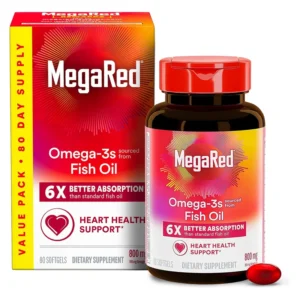
MegaRed Omega-3 Fish Oil with 6x Better Absorption
If you prefer fish oil, this one tackles its main weakness, absorption, with a formula MegaRed says is six times better absorbed than standard fish oil, so more of the omega-3 actually gets used. The 80-count makes it easy to take daily, and it is a good pick if you want a higher EPA/DHA dose than a small krill softgel delivers, without the classic fishy repeat.
- 6x better absorption than standard fish oil
- Higher EPA/DHA dose than a small krill cap
- 80-count for easy daily use
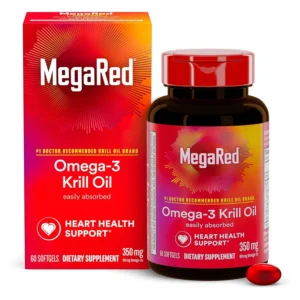
MegaRed Omega-3 Krill Oil, 60 Softgels
The most affordable way into MegaRed krill oil: the standard-strength 60-count is a two-month supply that lets you try krill without committing to the extra-strength price. Same small, easy softgel and astaxanthin, just a lighter dose, which is plenty for general daily omega-3 support. A sensible starting point if you are new to krill oil.
- Lowest-cost MegaRed krill option
- 2-month supply at one a day
- Great way to try krill oil
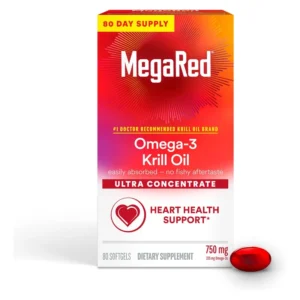
MegaRed Omega-3 Complex with Fish & Krill Oil
A well-balanced fish-and-krill blend in a generous 80-count, this is the easy everyday choice if you want both sources but a larger, better-value bottle than the ultra-strength 40-count. It gives you krill’s absorption and astaxanthin plus fish oil’s omega-3 content, in a once-daily softgel you can keep topped up for the long haul.
- Balanced fish + krill blend
- Generous 80-count for everyday value
- One softgel a day, long-term friendly
Krill oil vs fish oil: the real differences
Both are sources of the long-chain omega-3 fatty acids EPA and DHA, the part of omega-3 that matters most. Where they differ is the chemical form those omega-3s come in, how concentrated they are, and a few extras.
| Krill oil | Fish oil | |
|---|---|---|
| Omega-3 form | Phospholipid-bound (may absorb more readily) | Triglyceride/ethyl-ester bound |
| Dose per softgel | Lower EPA/DHA, but small capsule | Higher EPA/DHA possible per gram |
| Antioxidant | Naturally contains astaxanthin | None added by default |
| Aftertaste | Little to no fishy repeat | Can cause fishy burps (varies) |
| Cost | More expensive per gram of omega-3 | Cheaper per gram of omega-3 |
| Source | Antarctic krill (small crustaceans) | Oily fish (e.g. anchovy, sardine) |
So which is better, krill or fish oil?
For most people, neither is clearly “better”, they are two good ways to get EPA and DHA, and the right choice depends on what you value. Krill oil’s phospholipid form may be absorbed somewhat more efficiently and it comes with astaxanthin and an easier, less-fishy softgel, which is why many people prefer it day to day. Fish oil’s advantage is dose and price: it is the cheaper, simpler way to get a high amount of omega-3, which matters if you are aiming for a larger daily intake.
The honest bottom line: the best omega-3 is the one you will actually take every day and can comfortably afford. If small capsules and no fishy repeat will keep you consistent, krill wins for you. If you want maximum omega-3 for your money, fish oil does. And if you would rather not choose, a fish-and-krill blend gives you both.
It is the EPA and DHA that count
Whatever the source, the active ingredients you are really after are EPA and DHA. A higher-priced product is not automatically better, check how much EPA and DHA you get per day and whether you will keep taking it.
Consistency beats everything here: a modest daily dose you stick with does more than a premium bottle that sits in the cupboard. Food counts too, two servings of oily fish a week is a great foundation, with a supplement filling the gaps.
What is omega-3 actually good for?
Omega-3s (EPA and DHA) are essential fats that support the heart, brain, eyes and joints, and the strongest evidence is around heart and triglyceride health. They help maintain normal blood triglyceride levels, support healthy circulation, and play a structural role in the brain and the retina. Many people also take omega-3 for joint comfort, which is why krill oil is so often found alongside joint supplements. The benefits are supportive and best seen as part of a healthy diet, not a cure for any condition, and they build up with consistent use rather than appearing overnight.
How much omega-3 should you take, and when?
A common general target is around 250–500 mg of combined EPA and DHA a day for healthy adults, with higher amounts sometimes used under medical advice. Check the EPA/DHA figure on the label rather than just the total oil weight, as they are not the same. Take omega-3 with a meal that contains some fat, which improves absorption and reduces the chance of any aftertaste, and take it at the same time each day so you do not forget. As with any supplement, consistency over weeks and months is what delivers the benefit.
Side effects, safety & when to check with a doctor
Omega-3 supplements are generally very safe for healthy adults, with the most common issues being mild, fishy aftertaste, burping, or minor stomach upset. Taking them with food usually helps. There are a few situations where you should check with a doctor first, though.
Omega-3s can have a mild blood-thinning effect, so talk to your doctor before taking them if you are on anticoagulant or antiplatelet medication (such as warfarin or clopidogrel), have a bleeding disorder, or are due to have surgery. Krill oil and fish oil are derived from seafood, so avoid them if you have a fish or shellfish allergy. And if you are pregnant or breastfeeding, or considering omega-3 for a child, get personalised advice first.
Krill oil & fish oil FAQ
Is krill oil better than fish oil?
Neither is clearly better for most people; they are two good sources of the omega-3s EPA and DHA. Krill oil’s omega-3s are in a phospholipid form that may absorb a little more readily, and it includes the antioxidant astaxanthin with a smaller, less-fishy softgel. Fish oil is cheaper per gram and makes it easier to take a high dose. The best choice is the one you will take consistently and can afford.
Is krill oil the same as fish oil?
No, though they overlap. Both provide EPA and DHA, but krill oil comes from tiny Antarctic crustaceans and carries its omega-3s on phospholipids plus natural astaxanthin, while fish oil comes from oily fish and is usually a more concentrated, cheaper source of omega-3. They do the same essential job, just in slightly different forms.
How much krill oil or fish oil should I take per day?
A common general target for healthy adults is about 250 to 500 mg of combined EPA and DHA a day, with higher amounts sometimes used on medical advice. Read the EPA/DHA content on the label rather than the total oil weight, and follow the product’s serving directions. Take it with a meal containing some fat for better absorption and less aftertaste.
Does krill oil have side effects?
For most people side effects are mild, things like a fishy aftertaste, burping or minor stomach upset, and taking it with food usually helps. Because omega-3 can mildly thin the blood, check with a doctor first if you take anticoagulants, have a bleeding disorder, or are facing surgery. Avoid krill and fish oil if you have a fish or shellfish allergy.
What is MegaRed?
MegaRed is a well-known omega-3 brand best known for its Antarctic krill oil, sold in small, no-fishy-repeat softgels. The range also includes pure fish oil and combined fish-and-krill formulas, so you can choose krill, fish, or both. We stock several MegaRed options, from a value 60-count krill to extra-strength krill and fish-and-krill blends.
Can I take omega-3 with my medication?
Check with your doctor or pharmacist first, especially if you take blood thinners or antiplatelet drugs, because omega-3 has a mild blood-thinning effect. It is also wise to ask if you have a bleeding disorder, are pregnant or breastfeeding, or have surgery coming up. Omega-3 is a supplement, not a substitute for prescribed medicine, never stop your medication to take it instead.
The bottom line
Krill oil and fish oil are both solid ways to get the omega-3s EPA and DHA, the differences are absorption, dose, extras and price, not one being “good” and the other “bad.” Choose krill for easier-to-take, astaxanthin-rich softgels with little fishy repeat, fish oil for a higher dose at a lower price, or a fish-and-krill blend for both. From the MegaRed range we stock, that means Extra Strength Krill, the 6x Fish Oil, or the Ultra Strength Fish & Krill respectively. Whichever you pick, take it daily with food, check the EPA/DHA on the label, and talk to your doctor first if you take blood thinners or have a seafood allergy.
Editorial & commerce note: We stock and sell the products featured here, and the buy links go to our own store. We aim to give honest, useful guidance regardless of which product you choose.
Medical disclaimer: This article is for general information only and is not medical advice. Omega-3 supplements are not intended to diagnose, treat, cure or prevent any disease. Omega-3 can have a mild blood-thinning effect; consult a doctor before use if you take anticoagulant or antiplatelet medication, have a bleeding disorder, are due for surgery, are pregnant or breastfeeding, or have a fish or shellfish allergy. Do not stop prescribed medication in favour of a supplement.