By Clara Brandt, supplement and nutrition writer who reads the label and the NIH fact sheet before anything else; not a dietitian, so check a new supplement with your doctor first.
Neuriva: ingredients, side effects and what the studies show
Original, Plus, Ultra and Memory 3D compared label by label, what the trials found, who should not take it, whether it affects blood pressure, and what each costs per day.
Is Neuriva worth taking? The short answer
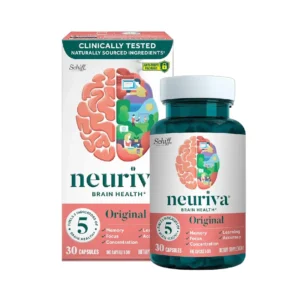
Neuriva has a little more evidence behind it than most memory supplements, and not much more than that. A 2023 trial of Neuriva Original in 138 adults found small gains on some computerized accuracy and reaction-time tests after six weeks, while memory questionnaires showed no difference from placebo; Reckitt, which sells Neuriva, paid for it. The label tells anyone on medication, pregnant, breastfeeding or living with a medical condition to check with a doctor first.
- What is in it?
- Coffee fruit extract (100 or 200 mg) and, in most versions, 100 mg of phosphatidylserine; Plus, Ultra and Memory 3D add B vitamins and one newer extract each.
- Does it have caffeine?
- The extract is decaffeinated, and the products are sold as caffeine-free or decaffeinated.
- Who should not take it?
- Per the label: people who are pregnant, breastfeeding, on medication or with a known medical condition, unless a doctor says yes. It also contains soy.
- What does it cost?
- About $0.98 to $1.33 a day for the capsules we stock (October 2026).
We sell Neuriva at WellBeUp and earn from those sales. The rest of this page is built from the product labels on file at the NIH, the published studies and the court record, so you can check every line.
Neuriva ingredients: what is in each formula
Every Neuriva formula is built on coffee fruit extract, which the brand calls NeuroFactor: the dried fruit of the coffee plant, not the bean, and decaffeinated. Most versions add 100 mg of phosphatidylserine (PS), a fat found in cell membranes that supplement makers usually source from soy. The amounts below are copied from the labels in the NIH Dietary Supplement Label Database (Original, Plus, Ultra, Memory 3D, Gummies).
| Formula | Daily serving | Coffee fruit extract | Phosphatidylserine | Vitamins | Extra ingredient |
|---|---|---|---|---|---|
| Original | 1 capsule | 100 mg | 100 mg | none | none |
| Plus | 1 capsule | 200 mg | 100 mg | B6 1.7 mg, folate 680 mcg DFE, B12 2.4 mcg | none |
| Ultra | 2 capsules | 200 mg | 100 mg | same B vitamins as Plus | Alpinia galanga extract (Cognivive) 300 mg |
| Memory 3D | 1 capsule | 100 mg | none | same B vitamins as Plus | grape extract (Cognicell) 250 mg |
| Original Gummies | 2 gummies | 100 mg | 100 mg | none | 3 g sugar per serving |
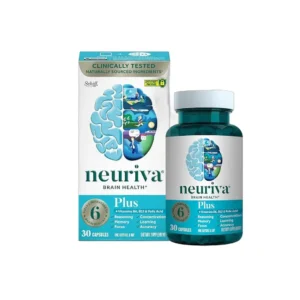
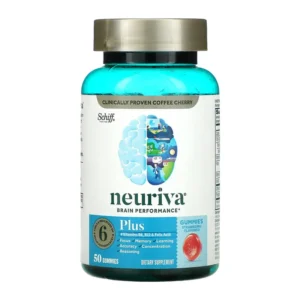
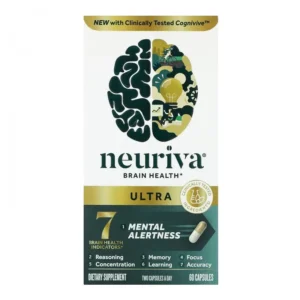
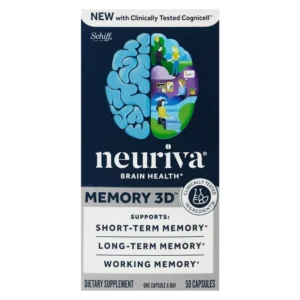
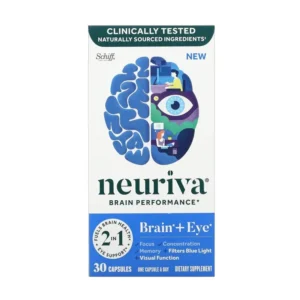
Two practical notes. The Original, Plus and Ultra labels say “Contains soy,” which matters if you avoid soy; Memory 3D drops the PS and is labeled decaffeinated, vegetarian and gluten-free. Brain + Eye adds lutein and zeaxanthin for eye health; we have not reproduced its amounts here because we could not check that label in the NIH database. Directions are for adults 18 and older: one capsule a day for Original, Plus and Memory 3D, two for Ultra.
Coffee fruit extract and phosphatidylserine, explained
The coffee fruit extract research starts with a small 2013 study: one 100 mg dose raised blood levels of BDNF, a protein involved in keeping brain cells healthy, by about 143% over baseline in a group of roughly ten healthy volunteers (Reyes-Izquierdo et al., British Journal of Nutrition, 2013). A blood marker going up for a few hours is a reason to study something further; it is not evidence that memory improves.
Phosphatidylserine has a longer history and a weaker reputation than its marketing suggests. In 2003 the FDA allowed a carefully hedged health claim for PS while noting there was “very little scientific evidence” that it reduces the risk of cognitive dysfunction and “little” for dementia (SupplySide, February 2003). The two newer extracts, Cognivive in Ultra and Cognicell in Memory 3D, are too new for independent trials we could find.
Does Neuriva work? What the trials found
Neuriva Original itself has one published randomized trial, and its results are mixed. Researchers gave 138 adults aged 40 to 65 who felt their memory was slipping either Neuriva Original (coffee cherry extract plus PS) or a placebo for 42 days (Doma et al., Neurology and Therapy, 2023). The Neuriva group did better on some accuracy and reaction-time tasks in a computerized test battery. It showed no difference from placebo on BDNF, on an everyday-memory questionnaire, or on a Go/No-Go attention test. Reckitt funded the trial and Reckitt employees were among the authors.
An earlier trial of the coffee fruit extract alone in 71 adults with mild cognitive decline found faster reaction times after 28 days but no main effect on accuracy; the extract’s manufacturer paid for that one (Robinson et al., Aging, Neuropsychology, and Cognition, 2020).
The lawsuit is worth a paragraph because it shaped the box. In Williams v. Reckitt Benckiser, buyers argued that “clinically proven” and similar brain-performance claims were not supported. A settlement offered $32.50 per claim with proof of purchase (or $5 without) and a two-year pause on “clinically proven”; nearly 60,000 claims came in. In April 2023 the Eleventh Circuit threw out the settlement’s approval because the named buyers lacked standing to demand label changes, and we could not find how the case ended after that (Eleventh Circuit opinion, 2023; Truth in Advertising tracker).
Neuriva side effects and safety
Neuriva’s documented side effects are few, partly because few people have been studied. In the 2023 trial, one participant’s dry mouth was rated as possibly related to the supplement. Phosphatidylserine is generally well tolerated, but its interactions with medicines are “not fully understood” (WebMD, October 2025), and it can cause allergic reactions, especially in people sensitive to soy.
Who should not take Neuriva?
The Neuriva label answers this directly: “Do not take if pregnant, breastfeeding, on medication, or with a known medical condition unless you have consulted a physician” (Neuriva Original label). Add a soy allergy to that list for the formulas that say “Contains soy,” and add anyone under 18, since the directions are written for adults.
Does Neuriva raise blood pressure?
We found no study or regulator statement linking Neuriva to higher blood pressure, and the coffee fruit extract is decaffeinated, which removes the obvious suspect. High blood pressure usually means a diagnosis and daily medication, though, and that is exactly the situation the label says to clear with a doctor first. Bring the bottle to your next appointment or ask your pharmacist.
Neuriva price and cost per day
Neuriva capsules cost about $0.98 to $1.33 a day at WellBeUp in October 2026. Original is the cheapest at $29.49 for 30 days; Plus doubles the coffee fruit extract and adds B vitamins for $36.99; Memory 3D is $37.99; Ultra comes in at $39.99 for 60 capsules, which is 30 days at two a day.
| Formula | Pack | Our price | Days | Per day |
|---|---|---|---|---|
| Original | 30 capsules | $29.49 | 30 | $0.98 |
| Plus | 30 capsules | $36.99 | 30 | $1.23 |
| Memory 3D | 30 capsules | $37.99 | 30 | $1.27 |
| Ultra | 60 capsules | $39.99 | 30 | $1.33 |
| Plus Gummies | 50 gummies | $36.99 | see label | n/a |
If the only difference you care about is the evidence, the trial above tested Original, which is also the least expensive. The whole range is on the Neuriva brand page.
Which Neuriva, if any?
If you want to try a memory supplement, Neuriva Original is the defensible pick within this brand: it is the formula that was actually tested, it is the cheapest per day, and the label is short. Give it the six weeks the trial used and judge it on something you can track. If you are choosing between brands, our Prevagen vs Neuriva comparison and the Prevagen evidence review cover the other big name the same way.
Neuriva Original, Plus, Ultra, Memory 3D and Brain + Eye in stock.
See Neuriva at WellBeUpSources
- NIH Dietary Supplement Label Database: Neuriva Original, Plus, Ultra, Memory 3D, Original Gummies labels, 2023 to 2025.
- Doma KM, Lewis ED, et al. A randomized, double-blind, placebo-controlled, parallel study investigating the efficacy of a whole coffee cherry extract and phosphatidylserine formulation on cognitive performance of healthy adults with self-perceived memory problems. Neurology and Therapy 12(3):777-794, 2023.
- Robinson JL, Hunter JM, et al. Cognitive short- and long-term effects of coffee cherry extract in older adults with mild cognitive decline. Aging, Neuropsychology, and Cognition 27(6):918-934, 2020.
- Reyes-Izquierdo T, Nemzer B, et al. Modulatory effect of coffee fruit extract on plasma levels of brain-derived neurotrophic factor in healthy subjects. British Journal of Nutrition 110(3):420-425, 2013.
- SupplySide Supplement Journal. FDA allows qualified selenium, PS health claims, February 2003.
- U.S. Court of Appeals, Eleventh Circuit. Williams v. Reckitt Benckiser LLC, 65 F.4th 1243, April 2023.
- Truth in Advertising. Neuriva class action tracker.
- WebMD. Phosphatidylserine, October 2025.
- Neuriva. Products (RB Health (US) LLC, a Reckitt company).